
How Secure Attachment Is Built in Early Childhood
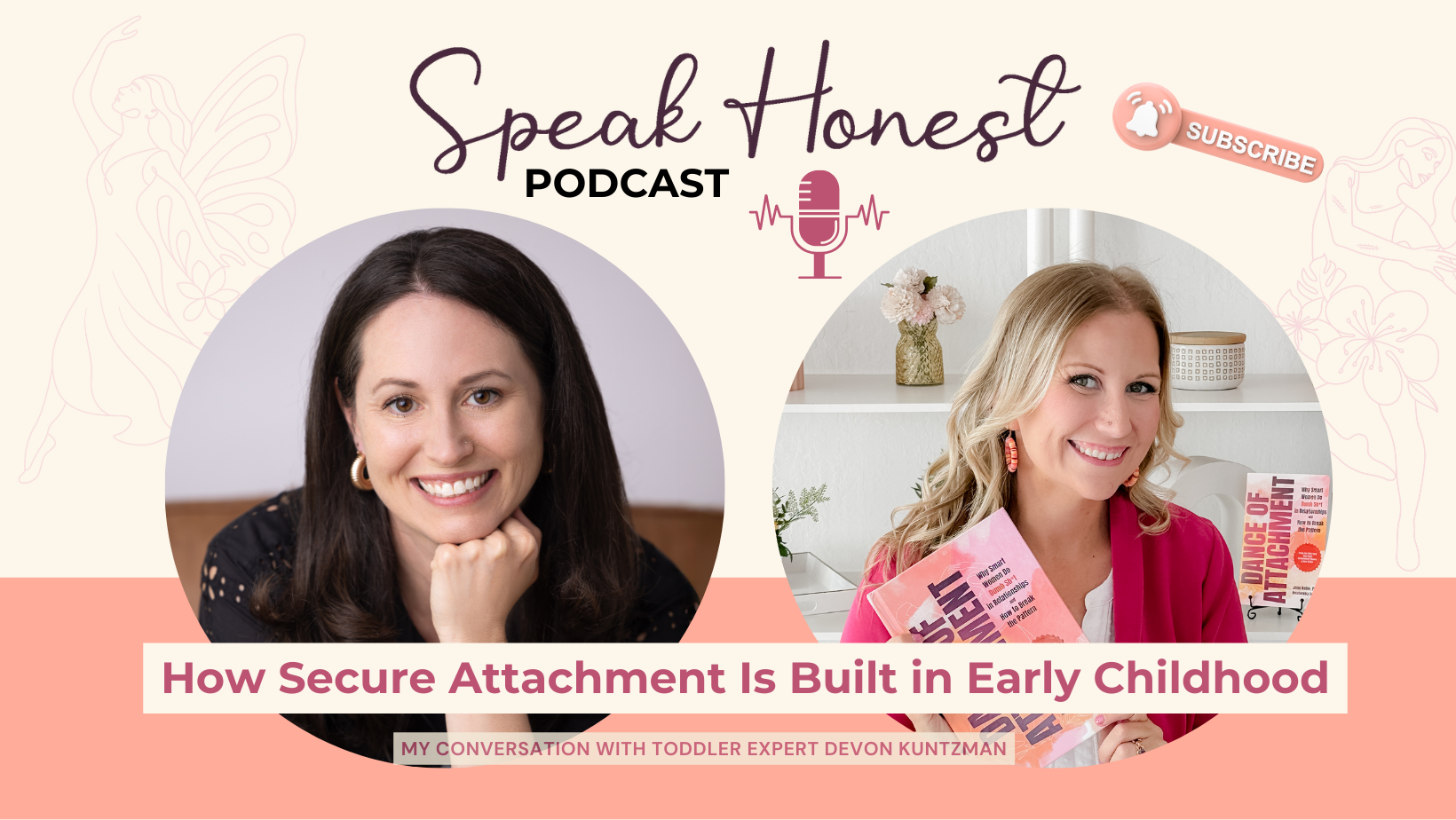
Want to listen on Apple Podcasts or Spotify? Click on the SHARE (next to more info) option below and Enjoy!
When You Lose Control and Your Inner Critic Takes Over
Have you ever lost your cool, whether with your child or just internally with yourself, and immediately felt that sinking feeling in your body? The tight chest, the spiral of shame, the thought of “I should be better than this by now.” For a lot of us, that moment isn’t just about what happened. It’s about old stories getting activated. Stories that say mistakes lead to disconnection, anger leads to abandonment, and big feelings aren’t safe. That’s where repair becomes everything.
Repair Is How Secure Attachment Is Actually Built
Secure attachment isn’t created by never losing control. It’s created by what happens after. When a child experiences a rupture and then experiences repair, their nervous system learns something crucial. Connection can be disrupted and restored. Love doesn’t disappear when emotions get messy. According to attachment research from Mary Ainsworth and later work by Daniel Siegel, it’s this consistent pattern of responsiveness and repair that helps children feel safe, not perfection. Repair teaches the brain that relationships are sturdy. They can hold conflict and still come back to closeness.
Why Repair Calms the Nervous System and Builds Trust
Repair works because it directly regulates the nervous system. When a rupture happens, both nervous systems activate. Fight, flight, freeze, or shutdown can show up fast. When you return calmly, name what happened, and reconnect, you’re signaling safety again. Over time, this teaches the brain that stress doesn’t equal danger. Studies on interpersonal neurobiology show that repeated experiences of co-regulation followed by repair help integrate emotional experiences and strengthen long-term trust. In simple terms, repair rewires the expectation of what happens after conflict.
What Repair Feels Like When You Practice It as a Parent
At first, repair can feel uncomfortable. It might feel vulnerable to say out loud, “I got overwhelmed earlier and that wasn’t about you.” You might worry it makes you look weak or unsure. But what actually happens is the opposite. Your presence becomes steadier. Your child learns that emotions don’t scare you away. Over time, repair starts to feel grounding instead of scary. It becomes a rhythm instead of a big deal. And that rhythm is what creates secure attachment.
How This Same Process Heals Your Inner Child
Here’s the part that matters just as much. This doesn’t only apply to parenting kids. It applies to reparenting yourself. If you grew up without repair, your nervous system may still expect punishment, silence, or abandonment after mistakes. Practicing repair with yourself means noticing when you lose control internally, maybe you snap at yourself, overwork, shut down, or spiral into self-criticism, and then choosing to come back with compassion instead of judgment. Saying internally, “That was hard. I got overwhelmed. I’m still safe.” This is how you become the secure attachment figure your inner child never had.
What to Expect When You Start Reparenting Through Repair
At first, this can feel strange or even fake. Your body might resist kindness because it learned that softness wasn’t safe. But with repetition, something shifts. The nervous system starts to relax more quickly. The inner critic loses some of its power. You stop bracing for the emotional fallout after mistakes. Just like with a child, your inner world begins to trust that rupture doesn’t mean rejection. That trust is the foundation of secure attachment, whether it’s built externally or internally.
The Long-Term Benefits of Repair for You and Your Relationships
Repair builds emotional safety. It increases resilience. It helps you stay connected instead of disconnected when things get hard. For parents, it raises kids who trust relationships. For adults reparenting themselves, it creates an internal sense of safety that changes how you show up everywhere, in love, in conflict, and in your own self-talk. Over time, repair stops feeling like something you have to remember to do and starts feeling like who you are.
An Invitation to Practice Repair With Yourself Today
If you’ve been holding onto guilt from moments you wish you could undo, let this be your permission slip. Secure attachment is built in the coming back, not the getting it right. Whether you’re repairing with your child or with your inner child, the work is the same. Notice the rupture. Slow down. Name what happened with honesty and care. And reconnect. That’s how safety is created. That’s how trust grows. And that’s how healing actually happens. ✨
