
What the Hell Is Attachment Theory?
Want to listen on Apple Podcasts or Spotify? Click on the SHARE (next to more info) option below and Enjoy!
Have you ever looked back at a relationship and thought… wait a second… how did I end up here again? Different guy, same emotional chaos. At first he seems amazing. Attentive. Charming. Maybe even a little mysterious (which we sometimes mistake for depth). Then suddenly you’re overanalyzing texts, wondering if you said something wrong, or trying to act chill while your nervous system is doing full Olympic level gymnastics. If that sounds familiar, let me reassure you of something important. You are not crazy. You are dancing a pattern. And that pattern usually has a lot to do with something called attachment theory.
A Sneak Peek from My Most Recent Speak Honest Episode
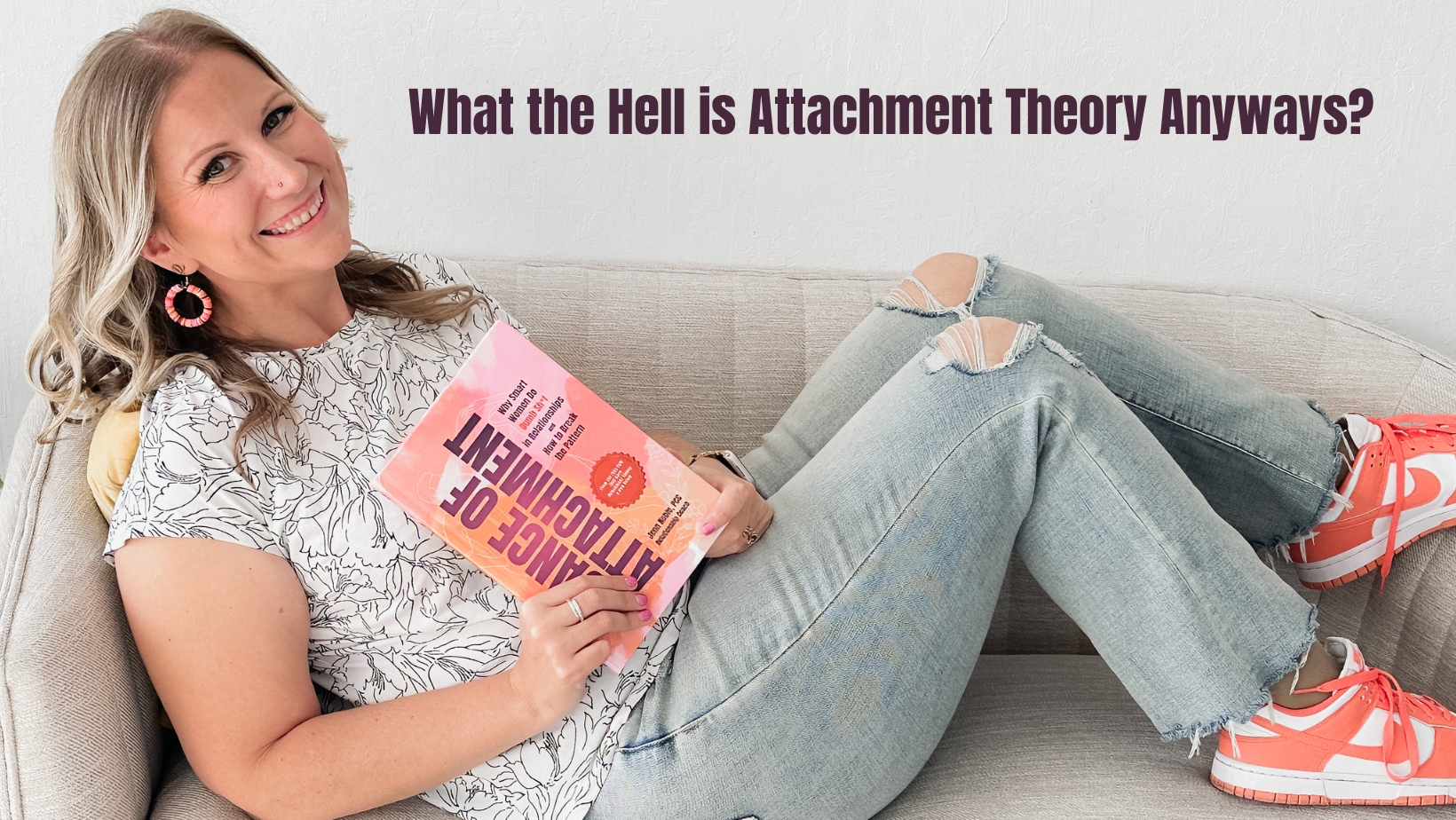
In my most recent episode of the Speak Honest podcast, I shared a small snippet from the very beginning of my bestselling book Dance of Attachment. It’s the part where I introduce the idea that many of the things we do in relationships actually make perfect sense once we understand our attachment patterns. The book walks through the four major attachment styles that show up in adult relationships. Anxious, Avoidant, Disorganized, and Secure. Each one shapes how we react to closeness, distance, emotional vulnerability, and conflict. When you start learning about these patterns, a lot of those confusing relationship moments suddenly start clicking into place (like… ohhhh THAT’S what was happening).
What Attachment Theory Actually Means
Attachment theory is a psychological framework that explains how our early relationships shape the way we connect with others later in life. British psychologist John Bowlby first proposed that humans are biologically wired to seek connection because connection equals survival. Later, psychologist Mary Ainsworth expanded on this work by observing how infants reacted when their caregivers left and returned to the room. Some babies soothed easily when their caregiver came back. Some clung and cried. Some acted like they didn’t care at all (but their little nervous systems were definitely having opinions). These reactions helped researchers identify different attachment patterns that influence how we experience emotional safety and connection in relationships.
Why Your Nervous System Keeps Repeating the Same Dance
Here’s the part that tends to make people breathe a huge sigh of relief. These patterns are not personality flaws. They are adaptations. Your nervous system learned what love felt like early in life and stored that experience as familiar. If love once felt inconsistent, unpredictable, or emotionally distant, your brain might still recognize those dynamics as normal. Familiar does not mean healthy (very important distinction). It just means known. That’s why someone emotionally unavailable can feel weirdly magnetic while someone steady and emotionally available might initially feel confusing or even a little boring (yes… that happens a lot).
The Moment Everything Starts Making Sense
When people first learn about attachment patterns, there’s usually a big oh wow moment. Suddenly the chasing, the overthinking, and the emotional rollercoaster start making sense. Instead of assuming something is wrong with you, you start realizing your nervous system was simply trying to protect connection in the only way it knew how.
Learning a New Dance
The beautiful thing about understanding attachment is that once you can see the dance, you can start changing the choreography. Awareness creates choice. You begin noticing old patterns sooner. You communicate more honestly. You start choosing relationships that feel calmer and more secure instead of chaotic and exhausting.
If this resonates with you and you want to dive deeper into the four attachment styles and how to begin healing them, you can learn more about my bestselling book Dance of Attachment at danceofattachment.com. Because once you understand the dance you learned, you finally get the chance to choose a better song. (And honestly… it’s a much nicer rhythm.)
